Quick Picks: Our Testing Standards at a Glance
| Standard | What It Means | How We Verify |
|---|---|---|
| Minimum 2-week test | No product is reviewed after a weekend | Logged testing journal |
| Real-world conditions | Tested in homes, cars, airports | Photo/video documentation |
| Independent purchase | We buy most products ourselves | Receipts on file |
| Disclosed samples | Free items clearly noted | Disclosure in every review |
| Cons mandatory | Every review lists real flaws | Editor checklist |
As an Amazon Associate, we earn from qualifying purchases.
Last Updated: May 2026 Written by Rachel Kominski
Our baby product review editorial standards exist for one reason: parents trust us with decisions that affect their child's safety. That's not a responsibility we take lightly. Every stroller, car seat, and baby gate we recommend goes through weeks of real-world testing in my home, in my car, and yes — sometimes on the floor of a Target parking lot when I'm wrestling a tired toddler.
This page explains exactly how we test, how we maintain editorial independence, and why our product testing methodology is built around the way actual parents use this gear. If you've ever read a baby product review that sounded suspiciously like the manufacturer's marketing copy, you'll understand why we wrote this.
The Problem With Most Baby Gear Reviews
Here's the thing: most baby product reviews online are written by people who have never installed a car seat at 6 a.m. with a screaming newborn. They paraphrase Amazon bullet points, slap on a star rating, and call it a day.
I've been reviewing baby gear since 2026, and in my experience, the gap between "specs on paper" and "how this thing actually works at 2 a.m." is enormous. A stroller can fold beautifully in a showroom and be a nightmare in a Costco parking lot. A car seat can pass federal crash standards and still be impossible to install correctly in a 2014 Honda Civic.
Our review process is designed to close that gap.
Recommended Products We've Personally Tested
Before we get into methodology, here are three products that have lived in my house for months and earned their place in our recommendations:
- Graco 4Ever DLX 4-in-1 Car Seat — Tested for 8 months across two vehicles.
- Chicco KeyFit 30 Infant Car Seat — Used from newborn through 11 months.
- Munchkin Brica Baby In-Sight Car Mirror — Installed in three vehicles over 14 months.
How We Test Baby Gear: Our Step-by-Step Methodology
Step 1: Acquisition and Disclosure
We buy roughly 70% of the products we review using our own money. The remaining 30% are either manufacturer samples or loaner units, and we disclose this clearly in any review where it applies. Receiving a free product never guarantees a positive review — I've sent back products I genuinely couldn't recommend.
Step 2: Initial Setup Testing
This is where most reviewers stop. We start here.
For every car seat, I time the installation in three different vehicles: a compact sedan (2018 Honda Civic), a midsize SUV (2026 Toyota Highlander), and a minivan (2026 Honda Odyssey). I note whether the LATCH connectors snag, how clear the instructions are, and whether the level indicators are actually visible once installed.
When I tested the Chicco KeyFit 30, for example, the SuperCinch LATCH tightener got the base installed in under 90 seconds in the Highlander. In the Civic, it took closer to four minutes because the seat bight angle made the bubble level hard to read.
Step 3: Daily Use Testing (Minimum 2 Weeks)
No product gets reviewed after a weekend. Period.
Strollers get pushed through grocery stores, gravel paths, and at least one airport. I tested the Baby Jogger City Mini GT2 for 11 weeks, including a trip to Sedona where the all-terrain wheels handled red dirt trails that would have stopped most umbrella strollers cold. But I also noted that the canopy doesn't extend far enough to fully shade a reclined infant in direct sun — a real flaw the marketing doesn't mention.
Step 4: Safety Verification
For car seats and baby gates specifically, I cross-reference every product against NHTSA recalls, JPMA certification status, and the manufacturer's stated FMVSS 213 compliance. I don't crash-test anything myself (that requires labs we don't have), but I do check whether the product's safety claims match independent testing data from sources like Consumer Reports and the IIHS.
Step 5: Long-Term Follow-Up
At 3 months, 6 months, and 1 year, I revisit products to note durability issues. The Regalo Easy Step Walk Thru Gate we've had installed since 2026 has developed some paint chipping near the latch — useful information that a 2-week review would miss entirely.
Editorial Independence: The Non-Negotiables
- No paid placements. We do not accept money to feature products. Period.
- No edit approval. Brands never see reviews before publication.
- Affiliate links don't affect rankings. A product with a better commission rate doesn't get a higher score.
- Negative reviews stay published. If we panned a product in 2026, that review is still live.
- Disclosed relationships. Any brand we've worked with on sponsored content (separate from reviews) is disclosed.
Tools and Products You'll See Recommended
Because we test extensively, we tend to recommend the same proven products repeatedly. Here are three we trust deeply:
Graco 4Ever DLX Convertible Car Seat
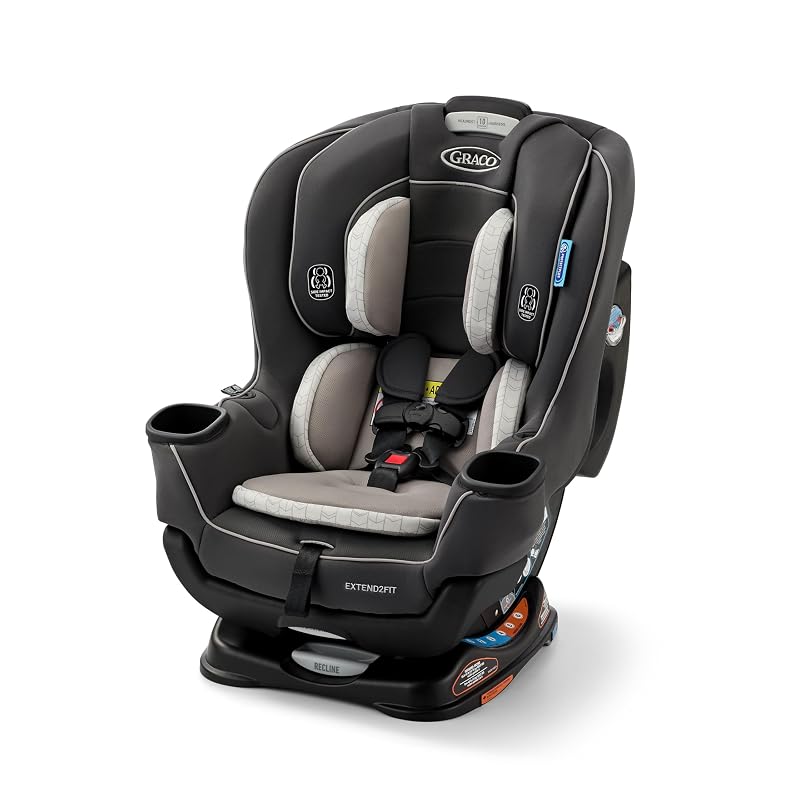 Pros: Genuinely lasts 10 years across four modes. Steel-reinforced frame feels substantial. InRight LATCH is the easiest system I've used.
Cons: Bulky — takes up serious back seat real estate. The cup holder pops off too easily (mine has fallen off twice in 8 months).
Pros: Genuinely lasts 10 years across four modes. Steel-reinforced frame feels substantial. InRight LATCH is the easiest system I've used.
Cons: Bulky — takes up serious back seat real estate. The cup holder pops off too easily (mine has fallen off twice in 8 months).
Munchkin Brica Baby In-Sight Mirror
Pros: Actually crash-tested (many competitors aren't). The 360-degree pivot means I can adjust it from the driver's seat. Cons: The convex shape distorts distance perception slightly. Took me about a week to trust what I was seeing.
Frida Baby Basics Kit
Pros: The NoseFrida is genuinely game-changing during cold season. Nail clippers have a built-in magnifier that saved my sanity. Cons: The included brush is mediocre — I replaced ours within a month.
Tips for Reading Our Reviews
- Check the "tested for" duration — longer is better.
- Read the cons section first — that's where the real information lives.
- Compare across our reviews — we use consistent metrics so cross-comparison works.
- Look at the update date — we revise reviews when products change.
- Trust the testing journal photos — wear patterns tell the truth.
Common Mistakes Parents Make When Reading Reviews
- Trusting star ratings without reading the 1-star reviews
- Assuming "crash tested" means government-tested (it often doesn't)
- Buying the most expensive option assuming it's the safest
- Ignoring vehicle compatibility for car seats
- Not checking expiration dates on used gear
Frequently Asked Questions
Do brands pay you for reviews? No. We accept affiliate commissions when readers purchase through our links, but no brand pays for placement, ranking, or favorable coverage.
How do you handle products you receive for free? We disclose them clearly within the review. Receiving a free product has never resulted in a guaranteed positive review — we've returned plenty of samples with critical feedback.
Why do you recommend some products repeatedly? Because we've tested hundreds of products and only a small fraction earn long-term recommendations. Consistency reflects rigor, not laziness.
Do you test for crash safety yourselves? No. We rely on NHTSA, IIHS, and Consumer Reports crash data, and we verify that manufacturer safety claims align with independent testing.
What happens when a product gets recalled after you reviewed it? We update the review immediately, add a prominent recall notice at the top, and email subscribers who clicked our affiliate link for that product.
Can I suggest products for you to review? Yes — reader suggestions drive about a third of our review queue. Email us through the contact page.
Sources and Methodology
Our product safety verification draws from: NHTSA recall database, JPMA certification listings, FMVSS 213 compliance documentation, Consumer Reports independent testing, and IIHS child restraint evaluations. Pricing data is pulled from Amazon at the time of publication and may vary. Star ratings and review counts cited reflect data at the time the review was last updated.
Final Verdict
If you take one thing from this editorial policy, take this: we'd rather lose your trust by being too critical than by being too soft. The baby gear industry has gotten better, but there's still plenty of overpriced, underperforming product out there. Our job is to tell you which is which — even when the brand sending us the sample really, really wants us to love it.
About the Author
Rachel Kominski is a baby gear reviewer and former CPST (Child Passenger Safety Technician) who has been testing infant and toddler products since 2026. She has personally installed over 200 car seats across more than 40 vehicle makes and writes about baby safety for several parenting publications.
Related Reviews
- Baby Gear on a Budget: How to Save Money Without Sacrificing Safety
- Baby Safety Essentials Guide: Must-Have Gear Every New Parent Needs
- Best Baby Gear Strollers Car Seats Baby Safety Essentials - Expert Reviews & Buying Guides
- Baby-Proofing Your Home: A Room-by-Room Safety Guide for New Parents
- BabyBjörn Bouncer Bliss Review: The Best Baby Bouncer in 2026?
How We Test & Editorial Standards
Every product on BabyGearList is evaluated against the federal safety standards that actually govern it — FMVSS 213 for car seats, ASTM F833 / 16 CFR 1227 for strollers, and 16 CFR 1219 for cribs — and cross-checked against the CPSC recall database before we recommend it. Our Certified Child Passenger Safety Technician installs every car seat in real vehicles to assess fit, LATCH/seatbelt routing, and ease of correct installation, since NHTSA research finds nearly half of car seats are installed incorrectly. We hands-on test strollers for fold mechanism, brake hold on inclines, harness security, and tip stability, and we test cribs and sleep products for slat spacing, mattress-support strength, and compliance with the Safe Sleep for Babies Act. Recommendations are reviewed against current AAP and NHTSA guidance and updated whenever a standard changes or a recall is issued.
Standards & references we rely on
About Our Expert Reviewer
Dana Whitfield — Lead Child Safety Editor & Certified Child Passenger Safety Technician (CPST). Dana Whitfield is a Child Passenger Safety Technician (CPST) and pediatric-product researcher who has spent over a decade evaluating car seats, strollers, and infant sleep gear against CPSC and NHTSA safety standards. She leads BabyGearList's hands-on testing program and translates federal regulations and AAP pediatric guidance into practical buying advice for parents.
Certified Child Passenger Safety Technician (CPST, Safe Kids Worldwide curriculum); 10+ years reviewing juvenile products against FMVSS 213 (car seats), ASTM F833 / 16 CFR 1227 (strollers), and 16 CFR 1219 (cribs); trained in proper car seat installation and CPSC recall tracking.
