The best baby gate for tile floors and knee walls with narrow baseboards in 2026 is a hardware-mounted gate paired with adjustable wall-cup extension plates that distribute pressure across multiple anchor points, plus non-slip silicone pads sized for sub-1.5-inch baseboards. Pressure-only gates slide on glazed tile and rarely seat flush against knee-wall returns, while standard hardware mounts assume thick trim. The combination of slick tile, short knee walls, and skinny baseboards demands a specific mount strategy. This guide walks through the exact gate types that solve all three problems, the hardware swaps that make them stick, and the install tweaks that pass a determined toddler.
Why tile floors, knee walls, and narrow baseboards break most baby gates
Three separate problems stack into one frustrating install. Glazed ceramic and porcelain tile have a friction coefficient close to wet glass once a pressure gate's rubber foot has been bumped a few times. Knee walls—the short pony walls topping a staircase or separating a landing—are usually 30 to 42 inches tall, sometimes capped with a rounded oak cap rail, and almost never flat enough for a gate's wall cup to seat squarely. Narrow baseboards, often the modern 1/2-inch by 2-inch profile common in builder-grade homes since 2018, give a hardware-mount wall plate nothing to bite into; the plate's screw pattern is sized for the older 3.25-inch colonial baseboard.
When shopping for best baby gate for tile floors and knee walls with narrow baseboards, it pays to compare specs, capacity, and real-world runtime before committing.
The result is that most gates marketed as “universal” fail in this exact scenario. Pressure gates walk across tile under a toddler's body weight. Hardware gates won't span the gap between the wall cup and the wall surface when the baseboard is too narrow to reach. And knee-wall mounts split decorative caprails because the screws hit a hollow framed cavity instead of solid wood.
The four mounting strategies that actually work
Before picking a gate, pick a mounting approach. The gate is almost secondary—the mount is what fails.
1. Hardware mount with extension plates
Y-spindle and Z-spindle extension plates push the gate's contact surface 1 to 3 inches off the wall, bypassing the narrow baseboard entirely and seating against the painted drywall above it. Look for plates rated for the specific gate model—Cardinal Gates, Safety 1st, and Regalo all sell first-party kits.
2. Banister-to-banister adapter kit
If a knee wall has a 2-inch or thicker cap rail, a no-drill banister adapter clamps around the cap and provides a vertical mounting post the gate can screw into. This avoids splitting the decorative wood and keeps the cap unmarred.
3. Sacrificial backer board
A 6-inch by 24-inch piece of poplar or pine, painted to match the wall and screwed into studs, gives a wide hardware-mount target on a wall with narrow baseboards. Most baseboards are still 3/4 inch thick; a 1x6 backer matches that depth so the gate plate sits flush.
4. Floor-anchored gate stanchion
For the tile-floor side, a floor-mounted stanchion (a vertical post anchored with a tile-rated wedge bolt) gives the gate a fixed pivot without trying to grip slick tile. This is the install used by daycares with tile lobbies.
Top baby gate types for this exact problem
Hardware-mount swing gate with adjustable wall cups
The Cardinal Gates SS-30 Stairway Special and the Regalo Easy Step Extra Tall remain the strongest 2026 picks for staircases topping a knee wall. Both ship with offset extension plates and accommodate baseboards as narrow as 5/8 inch when combined with the brand's Y-spindle kit (sold separately, around $18). Look for the version with the stainless steel hardware—the zinc version corrodes when installed near tile-floor bathrooms.
Retractable mesh gate
Retractable mesh gates such as the Perma Child Safety and the Dreambaby Retractable distribute load across a flexible mesh panel, which forgives the slight angle mismatch between a knee wall and the opposite wall. They install with four small screws per side, ideal for narrow baseboards because the mounting bracket is barely 1.5 inches tall. The downside: mesh gates fail the test for active climbers over 22 months, so plan to upgrade if you have an early walker.
Freestanding play-yard panel
For a doorway between a tile kitchen and a knee-wall landing, a freestanding 3-panel play yard (Regalo, Toddleroo by North States) creates a U-shape that braces against itself without needing any wall mount at all. This avoids both the tile and the narrow-baseboard problems, but it eats 18 to 24 inches of floor space.
No-drill tension gate—only with tile feet
If a hardware mount is genuinely impossible (rented home, historic plaster), use a pressure gate ONLY with aftermarket textured rubber tile feet (Gummy Bumpers and Wall Nanny both make sets compatible with most gates). Never use a pressure gate at the top of a staircase—American Academy of Pediatrics guidance has been consistent on this since 2018.
Installing a baby gate on a knee wall—the part people get wrong
Knee walls are framed with 2x4 studs on 16-inch centers, but the framing pattern at the wall's end (where you want to mount the gate) is usually a single “jack” stud plus blocking, not a full doubled post. If you drive a 3-inch screw straight into the wallcap, you'll likely hit the jack stud only on one side and miss on the other. The fix: locate the jack stud with a magnetic stud finder (drywall screws are magnetic; metal stud finders confuse on knee walls), then use the banister-to-banister kit to wrap around the entire end of the wall, transferring load to the cap and the studs simultaneously.
For knee walls with a rounded oak cap rail, never drill through the cap—the wood will split along the grain. Use the banister adapter's hose-clamp style strap, snugged with the included rubber gasket. See our baby gate installation tools guide for the exact stud finder and torque settings.
Working with the tile-floor side
If the other side of the gate is a normal drywall surface with a wide baseboard, you can hardware-mount that side conventionally. The challenge is when both sides have problems—e.g., a tile-floor entryway with knee walls on both sides leading to a staircase. In that case:
- Add a tile-protector pad (5mm cork or EVA foam) under any pressure point that touches the tile surface to prevent micro-cracks in the glaze.
- Use silicone-tipped wall cups instead of standard rubber—silicone grips microporous tile grout lines without slipping.
- Skip the “walk-through” auto-close feature if your tile has heavy texture; the gate latch needs a perfectly perpendicular swing to engage, and uneven tile throws it off.
Our pressure-mounted gate comparison covers which models offer aftermarket silicone foot kits.
What about the gap under the gate on uneven tile?
Tile floors with a slight slope toward a floor drain (common in kitchens and entryways) leave a wedge-shaped gap under any standard gate. A crawling baby can't slip through a gap under 2 inches, but a determined 14-month-old can. The fix is a custom rubber threshold sweep: cut a length of garage-door bottom seal to match the gap profile and screw it to the underside of the gate's bottom rail. The seal compresses at the high side and fills the gap at the low side. Total cost is about $11 and it makes the gate effectively sealed.
Related baby gear for the newly mobile
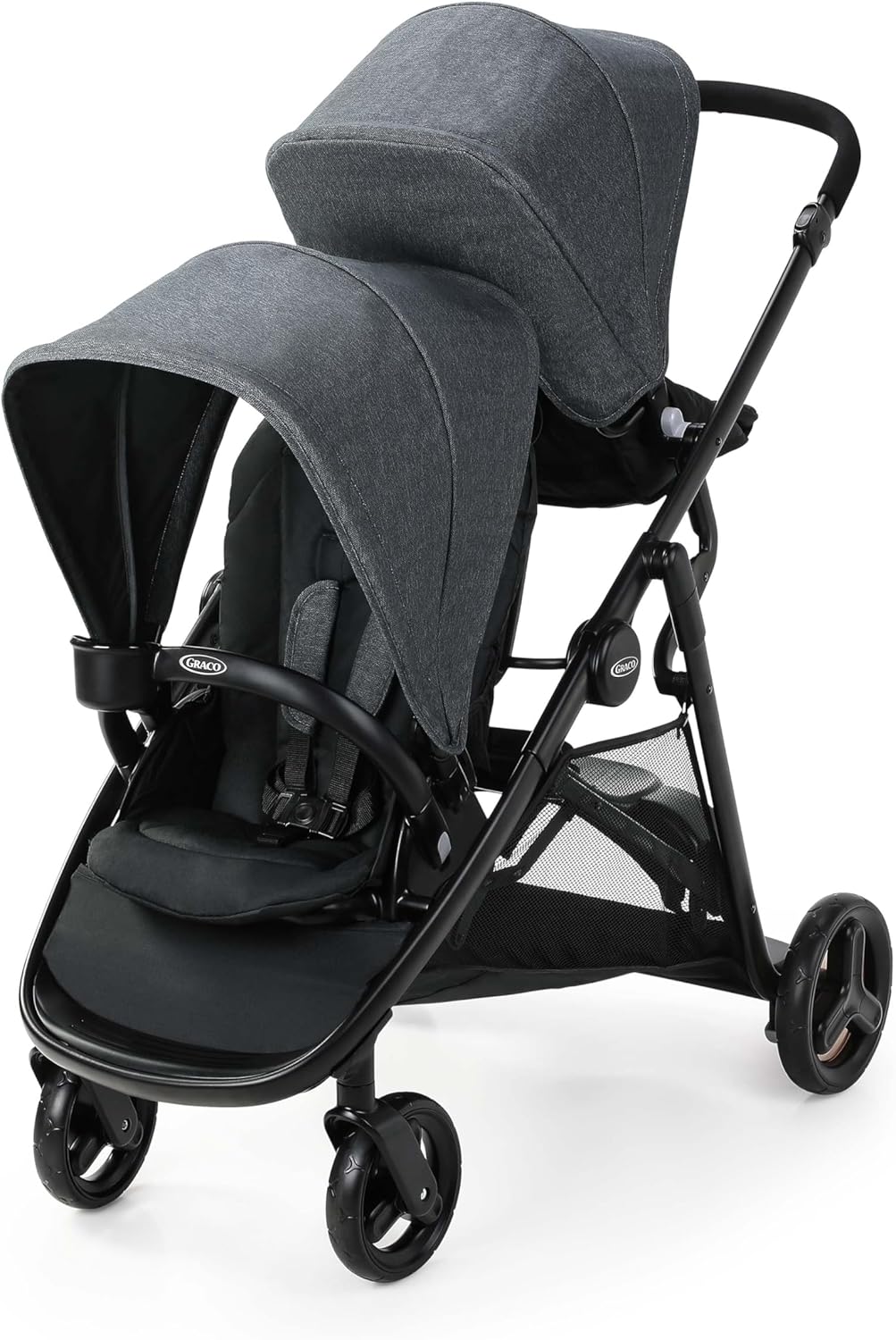
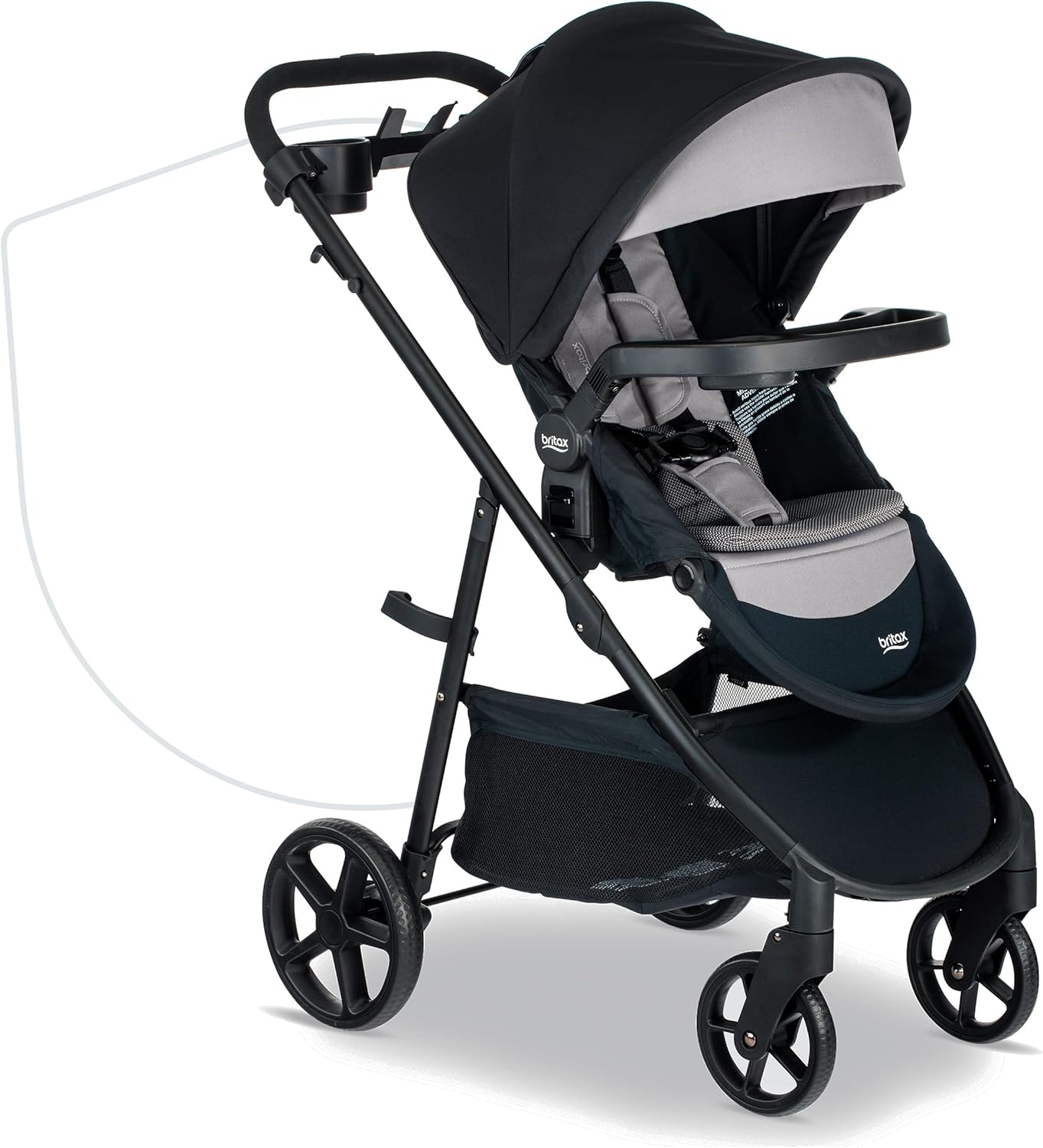
Babies who triggered the baby-gate purchase are usually also outgrowing infant-only car seats and bucket strollers. Below are the three travel-system options most often paired with a baby-gate purchase by parents shopping our 2026 baby-proofing checklist.
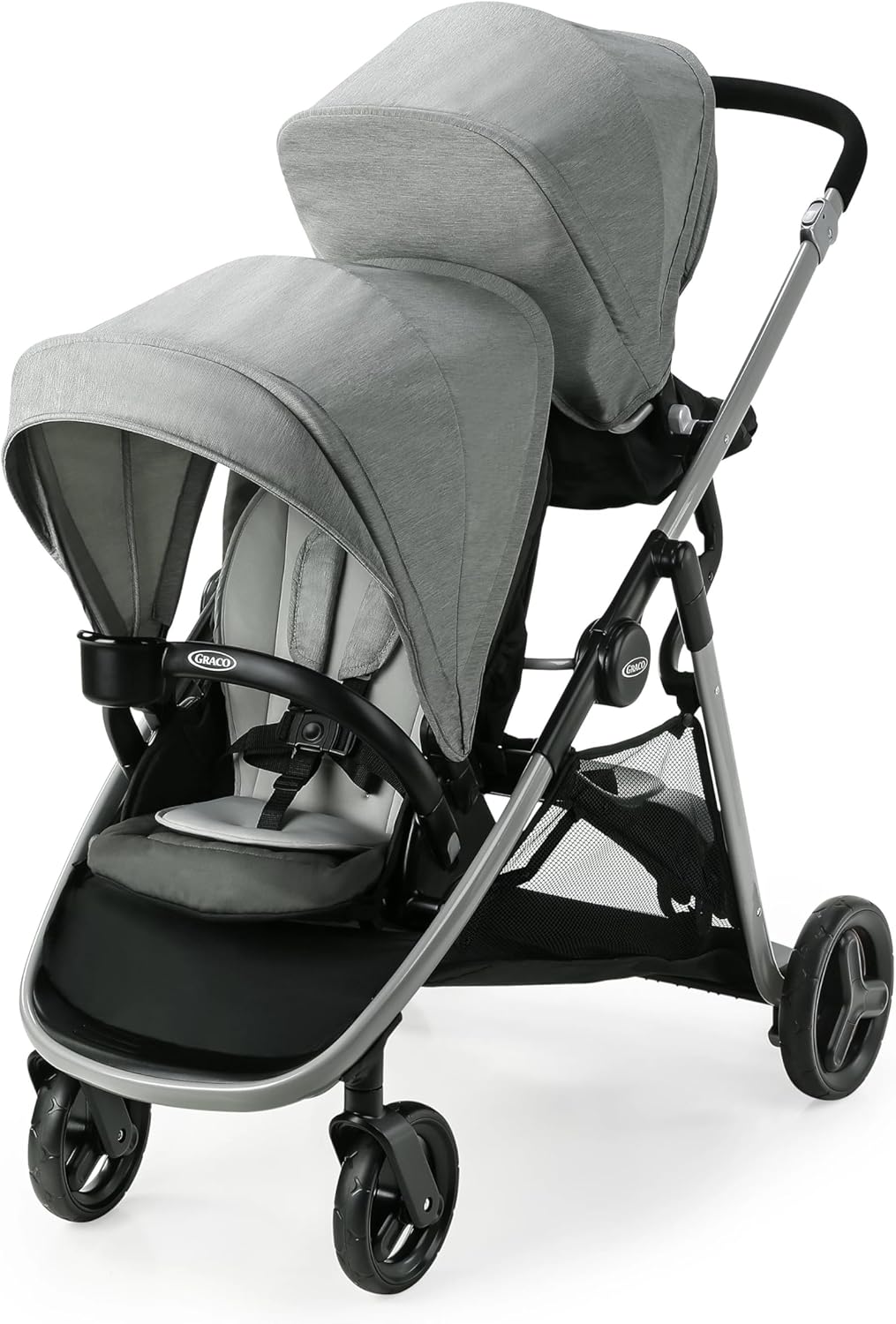
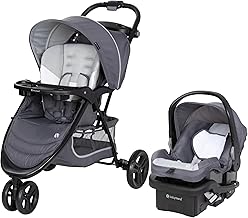
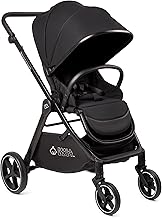
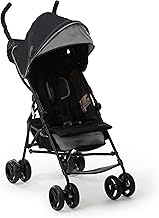
| Product | Type | Best for | Weight |
|---|---|---|---|
| Baby Trend EZ Ride Travel System | Stroller + infant car seat | One-purchase travel system | ~21 lbs |
| KOOLABABY Reversible Foldable Stroller | Reversible stroller | Parent-facing infant rides | ~16 lbs |
| Ingenuity 3D Mini Compact-Fold Stroller | Lightweight umbrella | Travel and tile-floor entryways | ~10 lbs |
Baby Trend EZ Ride Travel System with Infant Car Seat
If you're shopping for a gate because your newborn is now mobile and the infant car-seat-to-stroller dock you bought last year no longer fits, the Baby Trend EZ Ride bundles a forward-facing stroller with a compatible infant car seat in one box—useful as a backup travel rig once the primary stroller stays in the trunk. The full-size frame folds compact enough to slide between a knee wall and a tile entryway gate. Check current price on Amazon.
KOOLABABY Reversible Foldable Baby Stroller
The KOOLABABY reverses the seat to face parent or world, which matters for newborns under 6 months who shouldn't yet face forward. It's a good companion piece for the same tile-entryway households shopping for a gate—the narrow wheelbase fits through standard 30-inch baby gate openings without folding. See it on Amazon.
Ingenuity 3D Mini Lightweight Compact-Fold Stroller
For families with tile-floor garages where stroller storage is tight, the 10-pound Ingenuity 3D Mini folds to under 12 inches deep and stands on its own—no leaning against a knee wall. It's the stroller most often paired with a hardware-mounted gate purchase. View on Amazon.
Frequently Asked Questions
What is the best baby gate for tile floors and knee walls with narrow baseboards if I can't drill into the cap rail?
Use a banister-to-banister adapter kit that clamps around the knee wall's end without screws into the cap. Cardinal Gates and Kidco both sell adapters compatible with their hardware-mount gates. Combine with a Y-spindle plate on the opposite side to bypass the narrow baseboard. Total install takes under 20 minutes with no permanent damage—ideal for renters.
Can I use a pressure-mount gate on glazed porcelain tile?
Not safely at the top of a staircase. Pressure gates rely on friction at four points, and glazed porcelain has the lowest static friction of any common floor surface. If you must use one at a doorway (not a staircase), add textured silicone foot pads and recheck tension weekly. Pressure gates fail predictably—the question is when, not if.
How do I mount a baby gate to a wall with 1/2-inch baseboards?
Either install a Y-spindle extension plate (which holds the gate off the wall surface so the baseboard isn't load-bearing), or attach a painted 1x6 backer board screwed into studs above the baseboard. The backer board approach looks like trim and accepts any standard gate plate. For rentals, the spindle plate leaves smaller holes.
Will a hardware-mount gate damage a knee wall cap?
Only if you drive screws directly through the cap into end grain. Use a banister adapter to wrap the cap with a strap-and-gasket clamp; the rubber gasket distributes load and the cap stays unmarked. After removal, no holes or finish damage—tested across most oak and poplar cap profiles.
What height baby gate do I need for a 32-inch knee wall?
A standard 30-inch gate sits at 30 inches above the floor when mounted to the knee wall's vertical face below the cap. If you mount to the cap itself, an extra-tall 36-inch gate is needed so the top of the gate clears any climbing toehold. As a rule, the gate's top should be at least 6 inches above the knee wall cap, or 75% of your child's standing height—whichever is taller.
Are retractable mesh gates safe for the top of a staircase next to a knee wall?
Only if the mesh gate is hardware-mounted and JPMA-certified for top-of-stairs use. Most retractable mesh gates are certified for bottom-of-stairs and doorway use only. Check the box for the specific JPMA certification language; if it says “not for use at the top of stairs,” do not use it there regardless of how it mounts.
How long will I need a baby gate for a tile-floor entryway?
Most families remove gates between 24 and 36 months, when the child can be reliably trusted on stairs and around tile-floor hazards (slip risk, kitchen access). Hardware-mounted gates that involved drilling should be patched and repainted—a process easier with the spindle-plate or backer-board approach. See our extra-tall baby gates guide if you have a climber pushing the upper age limit.
Key Takeaways
- Choosing the right best baby gate for tile floors and knee walls with narrow baseboards means matching capacity and output ports to your actual devices
- Always check actual watt-hours (Wh), not just watts — runtime depends on Wh, not peak output
- Also covers: pressure baby gate that holds on tile floors
- Also covers: baby gate for short knee wall installation
- Also covers: no slip baby gate for tile floor traction
- Compare price-per-Wh across models to find the best value for your budget