When you're heading off-grid, the best baby monitor for cabin without wifi or cell service off grid is a long-range DECT 1.9 GHz or FHSS 2.4 GHz audio/video unit that uses its own private radio link between the camera and the parent handheld — no router, no SIM card, no cloud account required. WiFi-dependent smart cameras (Nanit, Owlet Cam, most app-based monitors) will not function at a remote cabin because they need a 2.4 GHz network and an internet-connected backend just to boot. In this 2026 guide we cover the radio technologies that actually transmit through cabin walls and trees, realistic range numbers, power planning, and the supporting baby gear that makes a backcountry trip workable.
Why most "smart" baby monitors fail off-grid
If you read the setup instructions for a Nanit Pro, Owlet Cam 2, Cubo Ai, Lollipop, Miku Pro, or any Eufy SpaceView smart model, every single one requires you to connect the camera to a 2.4 GHz WiFi network during initial pairing — and most also require a continuous internet handshake with the manufacturer's servers to stream video to your phone. At a true off-grid cabin with no cellular signal and no satellite router (Starlink, etc.), none of these will work. Even worse, several smart monitors brick their local-stream feature when the cloud is unreachable, so you can't even use them on a closed LAN.
When shopping for best baby monitor for cabin without wifi or cell service off grid, it pays to compare specs, capacity, and real-world runtime before committing.
The fix is to step back to the older, more reliable technology category: dedicated parent-unit monitors. These ship as a matched pair — a baby-side camera/microphone and a handheld parent screen — that talk to each other over a private encrypted radio link. There is no router in the middle, no app, no account. Plug the camera into power, turn on the handheld, and they pair. That is the entire setup. This is exactly the kind of monitor you want at a cabin.
The three radio technologies that work without internet
Three radio standards dominate the dedicated-parent-unit category, and each has different strengths at a cabin:
DECT 1.9 GHz (best overall for cabins)
DECT is the same protocol used by cordless landline phones. It's licensed for low-interference use, so the 1.9 GHz band is quiet almost everywhere — especially in the woods. DECT monitors typically advertise 1,000–1,800 ft range in open terrain and reliably push audio through one or two cabin walls. VTech's DM-series (DM221, DM1411) and Philips Avent SCD-series use DECT. If you want audio-only and bulletproof reliability at a remote cabin, this is the category to start in.
FHSS 2.4 GHz (best for video at moderate range)
Frequency-hopping spread spectrum in the 2.4 GHz band is what most video monitors use — Infant Optics DXR-8 Pro, Babysense HD S2, eufy SpaceView Pro (the non-WiFi model), HelloBaby HB65/66. These transmit color video to a dedicated 3.5" or 5" handheld with about 900–1,000 ft open-air range. Because 2.4 GHz is shared with WiFi, microwaves, and Bluetooth, you may get range degradation in town — but at a remote cabin where you are the only RF source for miles, FHSS performs better than its spec sheet suggests.
900 MHz analog (longest range, weakest privacy)
A handful of long-range monitors still use 900 MHz analog (Sony BabyCall, older Graco). 900 MHz penetrates dense foliage and log walls better than 2.4 GHz, sometimes hitting 1,500+ ft with line-of-sight obstacles. The downside: analog FM signals are not encrypted, so anyone with a scanner can listen. At an isolated cabin this is a non-issue; in a campground it's worth thinking about.
Range expectations at a real cabin
Manufacturer range numbers assume open field with no obstructions. A log cabin with insulated walls, a metal roof, and trees around the perimeter will cut quoted range by 40-70%. Plan for these working numbers:
| Technology | Quoted open-field | Realistic through 1 cabin wall | Through 2 walls + trees | Encrypted? |
|---|---|---|---|---|
| DECT 1.9 GHz | ~1,500 ft | ~600 ft | ~300 ft | Yes |
| FHSS 2.4 GHz video | ~900 ft | ~400 ft | ~200 ft | Yes |
| 900 MHz analog | ~2,000 ft | ~800 ft | ~500 ft | No |
| WiFi smart camera | 0 ft off-grid | 0 ft | 0 ft | N/A |
If your cabin layout puts the parent's bedroom more than ~30 ft from baby's room with a wall in between — typical cabin setup — any of the top three will work. If you want to sit on a deck 100+ ft from the cabin and still hear baby, DECT or 900 MHz are safer bets than 2.4 GHz video.
Power planning for off-grid use
The baby-side camera is the power hog. Almost every dedicated monitor camera draws 5V at 1A from a wall adapter and is not designed to run on internal battery for more than a few hours. At a cabin, plan for one of these power sources:
- Generator + small UPS: Most reliable. A 300 Wh portable power station (Jackery Explorer 300, EcoFlow River 2) will run a 5W monitor camera for 50+ hours continuous.
- 12V car/RV outlet with USB adapter: Many cabins have a small solar panel feeding a 12V deep-cycle battery. A $10 12V-to-USB adapter powers the camera indefinitely.
- Solar + small battery bank: A 50W panel and 20 Ah LiFePO4 will keep a camera live overnight with margin.
The parent handheld charges off USB and typically holds 8-12 hours of standby. Keep a 10,000 mAh USB power bank in the diaper bag and you'll never run dry. For more on packing a complete off-grid baby kit, see our guide on off-grid baby gear packing essentials.
Top features to look for in 2026
When you're shopping for the best baby monitor for cabin without wifi or cell service off grid, ignore every feature that depends on an app. Focus on these:
- Pure local pairing — no "setup mode" that requires WiFi to first connect to the manufacturer's servers. VTech, Infant Optics, Babysense, HelloBaby, Philips Avent, and Motorola PIP-series all support fully local pairing.
- Out-of-range alarm — handheld beeps if it loses sync with the camera. Critical if you wander further than expected.
- Two-way talk — soothes baby without you walking back in. Most FHSS video monitors include this.
- Temperature sensor — cabins swing 30°F overnight. A baby-side temp readout matters more than in a climate-controlled house.
- Night vision (for video models) — infrared works even when the cabin is pitch black with no ambient light pollution.
- USB-C charging on the handheld — 2026 models have largely moved to USB-C; one cable for phone, monitor, and power bank simplifies the diaper bag.
Other cabin baby gear you'll want
A monitor alone won't make a cabin trip with an infant smooth. The drive in, the daytime walks, and the in-cabin movement matter just as much. Three pieces we recommend pairing with whichever monitor you choose:
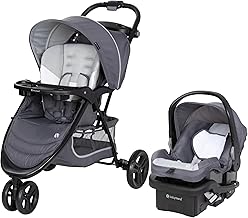
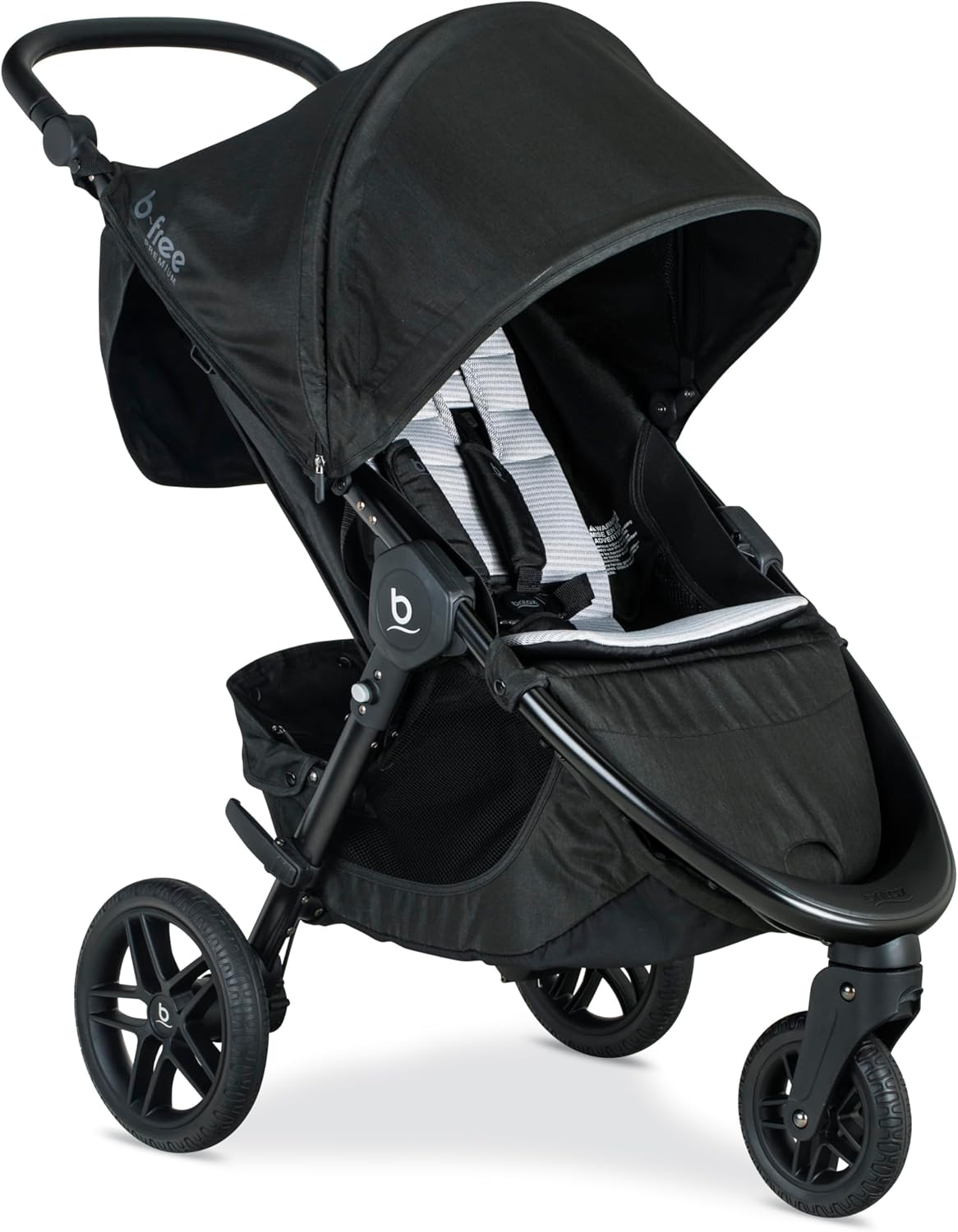
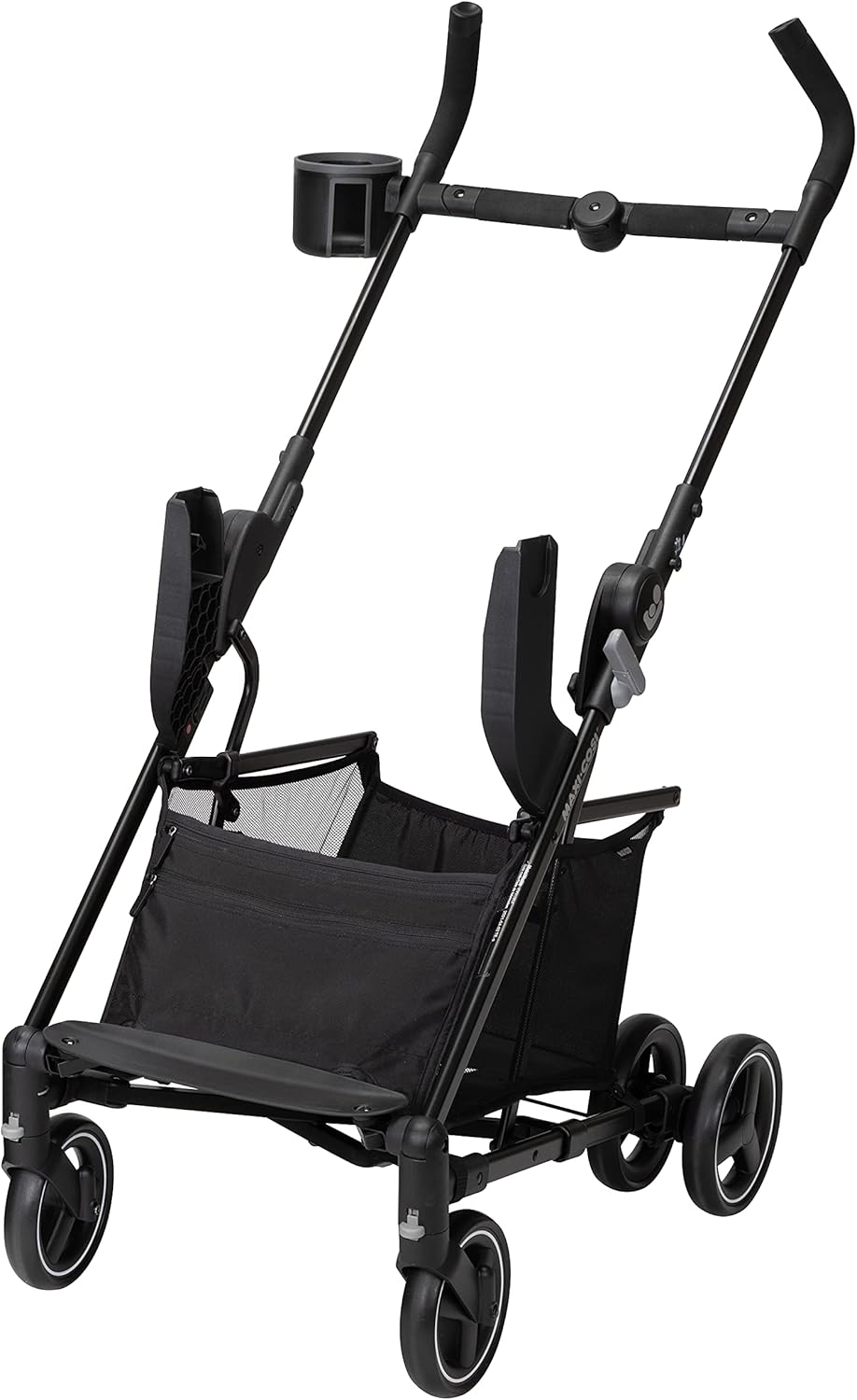
Baby Trend EZ Ride Travel System with Infant Car Seat
For the drive to the cabin, an integrated infant car seat that clicks into a stroller frame is the simplest way to move baby from car to porch without waking them. The Baby Trend EZ Ride bundles a rear-facing infant car seat (4-35 lb) with a full-size stroller frame, and the car seat meets current FMVSS 213 side-impact standards. The latch-and-go design is a real benefit when you're unloading at a remote cabin in the dark.
Check price on Amazon — Baby Trend EZ Ride Travel System
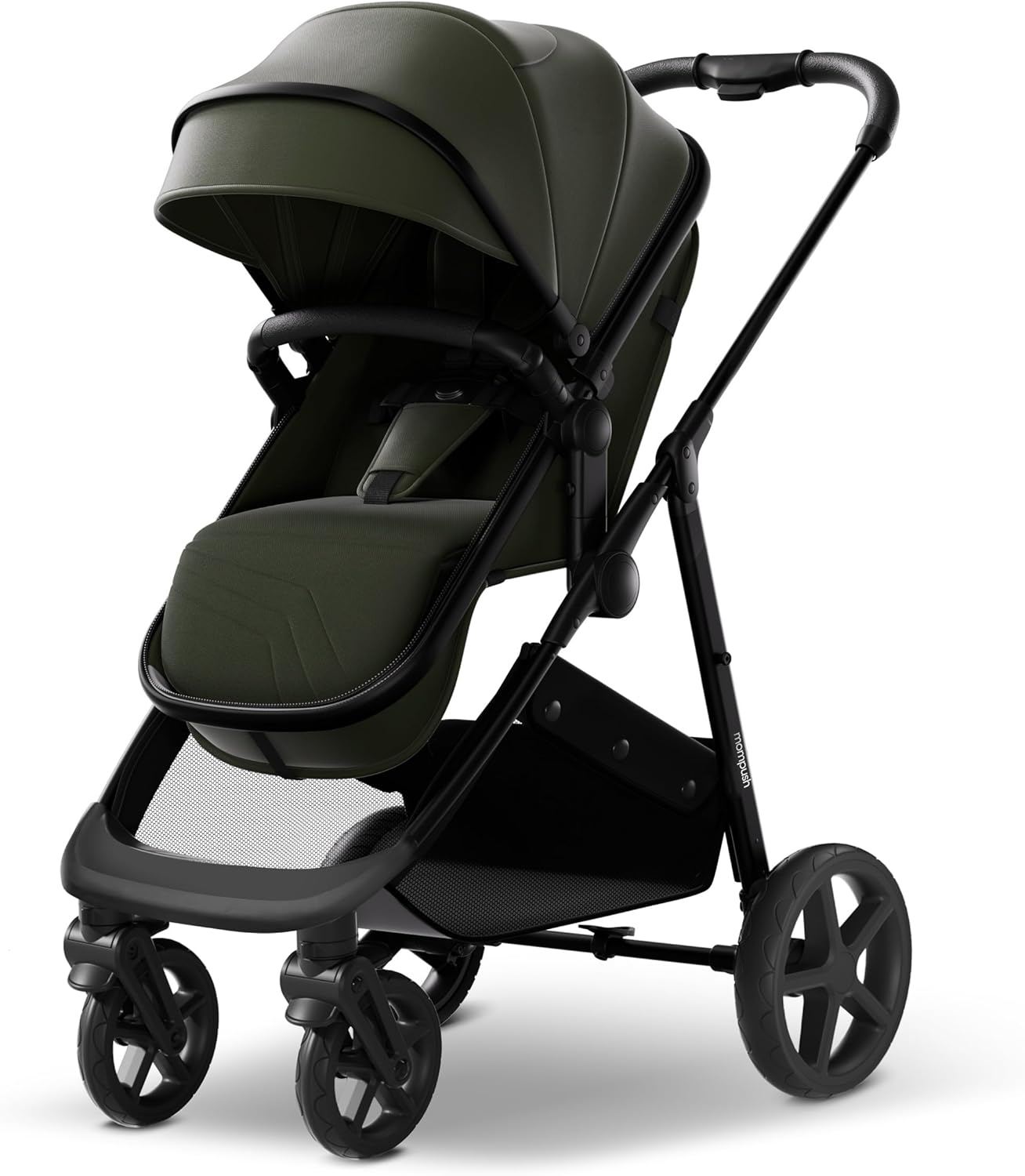
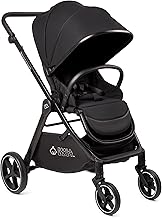
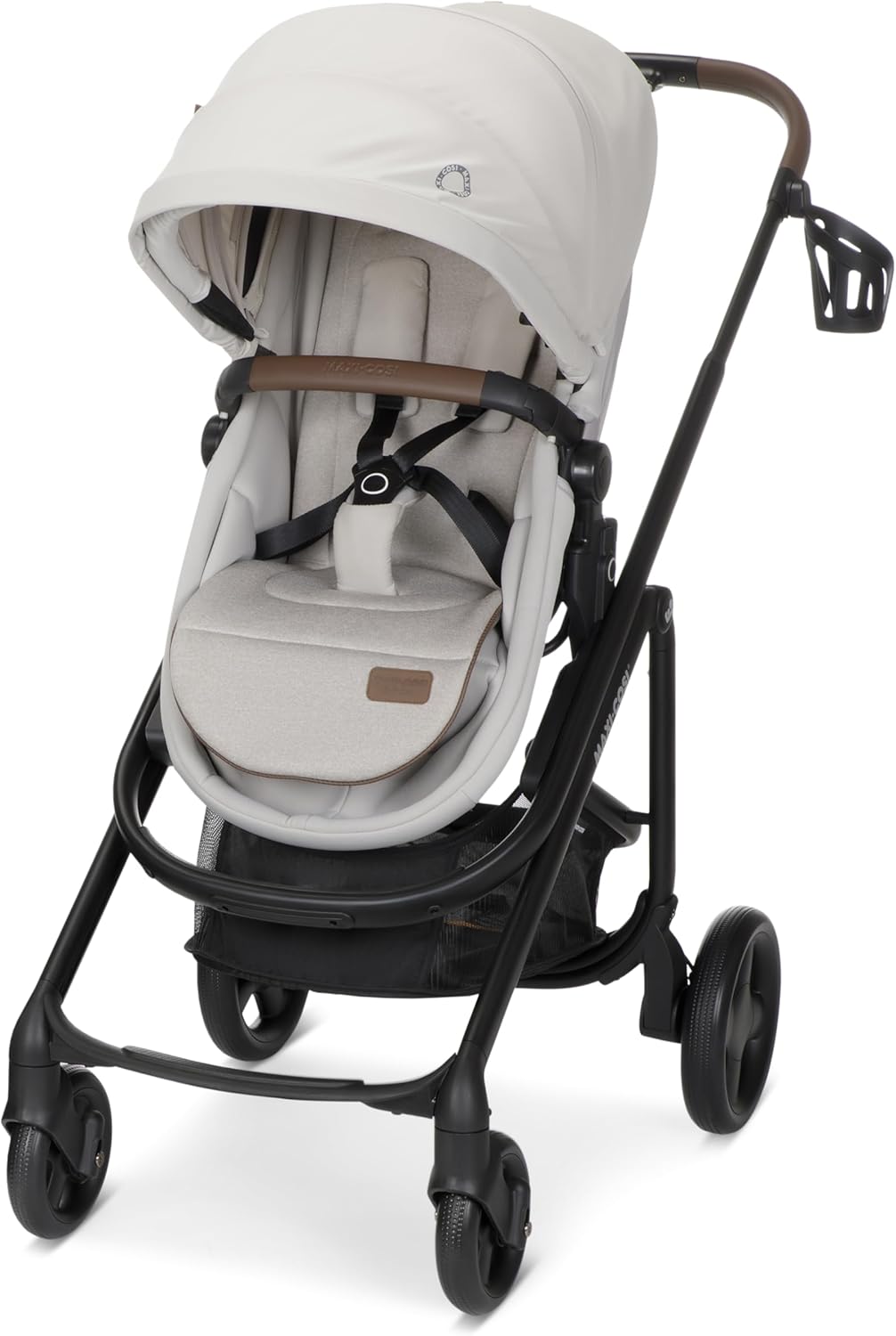
KOOLABABY Reversible Foldable Baby Stroller
For cabin walks on packed dirt and gravel paths, you want something that folds small enough to fit in a hatchback alongside coolers and gear. The KOOLABABY reversible-handle design lets the baby face you on rough paths (so you can spot fussiness before it escalates) and forward-out on the cabin's flatter areas. The frame folds compact in one motion, which matters when you're loading and unloading multiple times a day.
Check price on Amazon — KOOLABABY Reversible Stroller
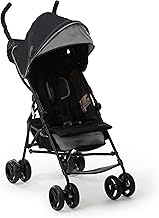
Ingenuity 3D Mini Lightweight Compact-Fold Stroller
If your cabin trip involves a fly-in or a small bush plane, weight matters more than features. The Ingenuity 3D Mini weighs under 12 lb, folds umbrella-style, and fits in most overhead bins. It is not the stroller you'd push five miles on a forest trail, but for quick walks to the dock or the firepit and for travel between vehicles and the cabin, it's the easiest unit in this lineup to deal with.
Check price on Amazon — Ingenuity 3D Mini Stroller
For more on choosing between full-size and compact strollers for outdoor use, see our breakdown of compact strollers for travel and our piece on infant car seats for long road trips.
Frequently Asked Questions
Do baby monitors need WiFi to work?
No. Dedicated parent-unit monitors (VTech DM221, Infant Optics DXR-8 Pro, Babysense HD S2, HelloBaby HB66, Philips Avent SCD630, Motorola PIP1610) use a private radio link between camera and handheld and do not need WiFi, cellular, or internet of any kind. Only "smart" monitors that stream to a phone app require WiFi. For an off-grid cabin you specifically want the non-WiFi category.
What is the longest range non-WiFi baby monitor for a cabin?
Among current 2026 models, DECT 1.9 GHz units like the VTech DM1411 and Philips Avent SCD630 advertise the longest reliable range (around 1,500 ft open-field, ~600 ft through a typical cabin wall). For video specifically, the Infant Optics DXR-8 Pro and Babysense HD S2 push roughly 900 ft open-field on 2.4 GHz FHSS. If you need to be more than ~600 ft from the cabin, prioritize DECT audio over video.
Will a baby monitor work without internet if I lose service at the cabin?
A non-WiFi dedicated parent-unit monitor will work identically whether you have internet or not — the camera and handheld pair directly. A WiFi-only smart monitor (Nanit, Owlet Cam, most app-based units) will go completely dark the moment the cabin loses its WiFi or its upstream internet, even for the local stream. If reliability off-grid matters, do not buy a smart monitor.
Can I use a baby monitor with Starlink at a remote cabin?
Yes. Starlink provides standard 2.4/5 GHz WiFi from its router, so any smart monitor that needs WiFi will work. But Starlink draws ~50W continuously, costs around $120/month, and is overkill if the monitor is your only reason for it. A dedicated $40-$200 non-WiFi monitor accomplishes the same goal with zero ongoing cost and no power overhead.
What is the best video baby monitor without WiFi for off-grid use?
The Infant Optics DXR-8 Pro is the most widely recommended non-WiFi video monitor for off-grid scenarios — 5" handheld display, 720p, two-way talk, no app required, fully local 2.4 GHz FHSS pairing. Babysense HD S2 and HelloBaby HB66 are strong cheaper alternatives. All three pair without ever touching the internet.
How do I power a baby monitor camera at a cabin with no electricity?
The camera typically wants 5V/1A USB power. The cleanest off-grid setup is a 300+ Wh portable power station (Jackery Explorer 300, EcoFlow River 2 Mini) — it will run a 5W monitor camera continuously for 50+ hours and recharges from a 50-100W solar panel during the day. A 12V deep-cycle battery with a USB adapter works equally well. The handheld parent unit recharges off the same USB and a 10,000 mAh power bank holds it for several days.
Are non-WiFi baby monitors secure from eavesdropping?
DECT and FHSS monitors both encrypt the radio link between camera and handheld, so casual scanners cannot listen in. Older 900 MHz analog monitors are unencrypted FM and can technically be picked up by an off-the-shelf scanner — at an isolated cabin this is a non-concern, but in a campground or shared-property setting choose DECT or FHSS over 900 MHz analog.
Can I use a walkie-talkie as a baby monitor at a cabin?
It works in a pinch but is not recommended. Walkie-talkies are push-to-talk, so the baby's side would need to be VOX-activated, and most consumer GMRS/FRS radios have poor VOX sensitivity for infant breathing or quiet fussing. A purpose-built DECT audio monitor costs about the same and is engineered specifically for the always-on, low-volume audio you need.
Key Takeaways
- Choosing the right best baby monitor for cabin without wifi or cell service off grid means matching capacity and output ports to your actual devices
- Always check actual watt-hours (Wh), not just watts — runtime depends on Wh, not peak output
- Also covers: off grid baby monitor no wifi cabin
- Also covers: analog baby monitor no internet cabin
- Also covers: baby monitor for remote cabin no cell service
- Compare price-per-Wh across models to find the best value for your budget