If you have a stone fireplace and a crawling baby in your home, learning how to baby proof fireplace hearth with sharp stone edges is one of the highest-impact safety projects you can knock out this weekend. The fast answer: wrap every sharp corner and exposed lip with dense edge-foam bumpers attached with high-bond outdoor adhesive, cover the flat hearth surface with a thick padded hearth cushion, install a freestanding hearth gate or superyard around the entire fireplace footprint, and add a magnetic glass-door lock so curious hands cannot reach embers. The cat changes the calculus slightly — you need adhesives strong enough to survive paw swatting and barriers tall enough that a determined climber cannot vault them. Read on for the full 2026 build.
Why Stone Hearths Are the Most Dangerous Surface in a Baby's Home
Pediatric ERs see thousands of hearth-related head lacerations every year, and the worst injuries almost always involve natural stone — slate, granite, fieldstone, and flagstone. Unlike brick, which has rounded factory edges, cut stone has 90-degree corners that can split scalp skin to the bone from a fall of less than two feet. A baby pulling up on the coffee table four feet away is one wobble from a stitches-worthy gash. That is the threat model you are designing against.
The good news: figuring out how to baby proof fireplace hearth with sharp stone edges is not a contractor-level project. With about $150 in materials and a Saturday afternoon, you can take a hearth from "call the pediatrician" hazard to a surface you can let a 10-month-old crawl past without panic. If you also have a cat, you will spend an extra $20 and twenty minutes accounting for paw-level interference, which we cover below.
The Four-Layer Defense System
Baby-proofing professionals build hearths in layers because no single product fixes everything. A foam bumper alone won't stop a runner. A gate alone won't help if your toddler reaches through the bars. Use all four layers:
- Layer 1 — Edge protection: Dense closed-cell foam corner and edge guards on every protruding stone.
- Layer 2 — Surface cushion: A wide padded hearth cushion that drapes over the flat top and front face.
- Layer 3 — Perimeter barrier: A freestanding hearth gate or 6-panel superyard that keeps baby a full body-length away.
- Layer 4 — Firebox lockout: Magnetic or screw-mount glass-door locks plus a flue damper lock so the firebox itself is sealed.
Skipping any one of these creates a single point of failure. Skipping the gate, for example, means your edge foam now has to survive direct impact, and 1-inch foam stops about 30% of fall energy on stone. Not enough.
Step 1: Map and Measure Every Sharp Edge
Before you buy anything, walk around the hearth on your knees — literally at baby eye-level — with a tape measure and your phone. Photograph every corner and edge that protrudes. You are looking for:
- The front lip of a raised hearth (usually the worst offender)
- Vertical corners where the hearth meets the floor or wall
- The mantel base, if it has cut-stone returns
- Stone surround corners at the firebox opening
- Any decorative stone that juts into the room
Measure total linear inches of edge that needs foam. A typical 5-foot raised flagstone hearth runs about 14 linear feet once you include the top edge, front face transitions, and two side corners. Buy 25% more foam than you measure — you will mismark cuts.
Step 2: Choose the Right Edge Foam (This Is Where Cat Owners Differ)
Standard nursery edge guards are made of soft EVA foam with cheap double-sided tape backing. They work fine on a coffee table but fail badly on rough stone for two reasons: porous stone resists adhesive, and a cat will pop them off in days for fun.
For stone hearths, look for these specs:
- NBR or high-density EVA foam, at least 5/8" thick, not the 3/8" budget stuff
- 3M VHB-style acrylic foam tape pre-applied, not basic mounting tape
- L-shape or U-channel profile that wraps around the edge instead of sitting on top
- Outdoor-rated — these adhesives bond to porous surfaces and survive temperature swings near the firebox
If you have a cat, also pick up a tube of clear marine-grade silicone. After you stick the foam, run a thin bead of silicone along the back edge where the foam meets stone. Cats cannot get a claw under it, so they stop trying after a day or two. This is the single best cat-proofing trick we know.
Step 3: Install the Hearth Cushion
Edge foam protects corners. A hearth cushion protects the flat top, which is what your baby's forehead actually hits during a tumble. Hearth cushions are essentially long padded mats covered in fabric with elastic straps or weighted edges that drape over the hearth top and down the front face.
Pick one with:
- At least 1.5 inches of compressed foam thickness
- A washable, removable cover (you will spill on it)
- Non-slip backing so it doesn't slide when bumped
- Flame-retardant fabric rated for proximity to a fireplace
For a cat household, avoid plush velvet or shaggy cushions — they become scratching posts within a week. Tight-weave canvas or sailcloth covers stay intact. Measure your hearth length and add 12 inches so the cushion overhangs each side, giving the corner foam underneath full coverage.
Step 4: Build the Perimeter with a Hearth Gate
This is the layer most parents skip and most pediatricians wish they wouldn't. A baby gate around the entire hearth keeps your child a full 18 inches away from any stone surface, which is the actual difference between a bumped chin and a trip to urgent care. We strongly recommend a freestanding superyard with at least 6 panels, not a wall-mounted pressure gate — you cannot pressure-mount a gate against rough stone.
Look for:
- Heavy steel construction, not plastic (a 25-pound toddler can topple plastic)
- Minimum 30 inches tall to deter cat jumping and toddler climbing
- Vertical bars, not horizontal — horizontal slats become ladders
- Wide base feet that splay outward for tip resistance
- An optional walk-through door so you can still tend a fire as an adult
If you live in a tight room and a 6-panel superyard wraps too far into the walking path, a single-piece hearth gate that bolts into the wall studs on either side of the fireplace is the next best option. Wall mounting is non-negotiable on stone — pressure-mount gates fail.
Step 5: Lock the Firebox Itself
Even with a gate up, you will have moments — carrying laundry, answering the door — when the gate is open and your baby is on the floor. The firebox must be independently secured.
- Magnetic glass-door locks mount inside the door frame and require a magnetic key to release. Invisible from outside, child-impossible to defeat.
- Damper locks prevent the flue from being opened by a curious climber and prevent ash from being knocked into the room.
- Ash bucket lockaway — if you actually use the fireplace, the ash bucket stays in the garage, never next to the hearth.
If you do not burn fires, consider permanently sealing the firebox with a chimney balloon plus a snug-fit decorative cover. A non-functional fireplace is dramatically safer than a functional one with a curious crawler.
Cat-Specific Adjustments
Cats undermine baby-proofing in three predictable ways:
- They peel foam. Solved by the silicone bead trick in Step 2.
- They knock cushions askew. Solved by non-slip backing plus a 1-inch strip of removable Velcro between cushion and hearth.
- They jump the gate and pull the cushion down. Solved by a 30-inch+ gate height and a top rail that gives them no perch.
One more thing: cats love sleeping on warm hearths. If yours has been doing this for years, expect protest behavior for about a week after you install the gate — yowling at it, swatting the bars. Hold the line. They adapt by day 8 or 9 and find a new sunny spot.
Keeping Baby Contained While You Work
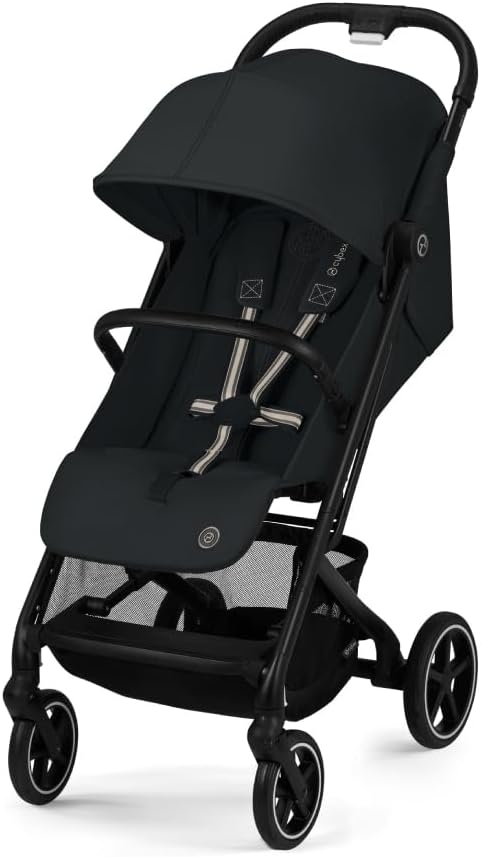
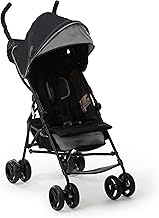
One practical note for the installation day itself: you will be using adhesives, screws, and small parts that you absolutely cannot leave around a crawler. Park your baby in a travel stroller in the next room with a sibling or partner watching, or strap them in a high chair with a snack. If you need a compact stroller for indoor containment during projects like this, the Ingenuity 3D Mini Lightweight Compact-Fold Stroller opens and closes in one hand and tucks against a wall when you are done. Not a baby-proofing tool per se, but the right project-day accessory.
Materials Shopping List
Your full 2026 build runs about $130–$180 depending on hearth size:
- 20 ft of high-density NBR edge foam with 3M backing — $25
- Padded hearth cushion, 6 ft, non-slip backing — $55
- 6-panel steel superyard with door — $80
- Magnetic glass-door lock kit — $15
- Clear marine silicone tube — $8
- Chimney balloon (if sealing) — $40 optional
For broader nursery setup beyond the fireplace, see our guide on the best baby-proofing products of 2026 and our walkthrough on how to baby proof stone stair edges.
Common Mistakes to Avoid
- Cheap thin foam. Anything thinner than 5/8" is decorative, not protective.
- Pressure-mount gates on stone. They will fall. Period.
- Skipping the cushion because "the foam is enough." Foam covers corners; the cushion covers the flat top your baby hits face-first.
- Leaving fireplace tools nearby. Andirons, pokers, and brushes go in a locked cabinet during the baby years.
- Trusting a fireplace screen as a barrier. Screens block sparks, not toddlers. They tip over.
When to Reassess
Re-walk the hearth on your knees every three months. Foam adhesive degrades, cushions shift, and your toddler grows taller and stronger faster than you expect. The setup that worked at 10 months may need a taller gate at 18 months when climbing starts. Most families can remove the gate around age 3, keep the cushion until age 4, and pull the foam at age 5.
Frequently Asked Questions
How do I attach edge foam to rough natural stone that won't hold tape?
Use NBR foam with 3M VHB acrylic backing, not basic double-sided tape. Wipe the stone with isopropyl alcohol first, press the foam in place for 30 seconds, then run a bead of clear marine silicone along the back edge. The silicone gives the foam a mechanical anchor that survives both heat cycling and cat interference.
How to baby proof fireplace hearth with sharp stone edges without drilling into the stone?
Skip wall-mounted gates entirely and use a freestanding 6-panel steel superyard that surrounds the hearth on its own footprint. Combine that with adhesive-mount edge foam and a draped hearth cushion. The entire system installs with zero drilling and is fully reversible if you sell the home.
Are hearth cushions actually fire-safe near an active fireplace?
Reputable hearth cushions are made with flame-retardant batting and fabrics that meet ASTM F2933 padded crib bumper safety standards. That said, never leave a cushion in place while a fire is burning — the cushion is for when the fireplace is cold. Remove it before lighting and reinstall after the firebox cools.
Will my cat destroy the foam corner guards on my fireplace?
Possibly, if you use cheap EVA foam with weak adhesive. With dense NBR foam, VHB tape, and the silicone bead trick described above, most cats lose interest within a few days because they cannot get a claw under the foam. Trim claws regularly during the transition week.
What is the minimum gate height to keep both babies and cats off the hearth?
30 inches stops most toddlers under 18 months and discourages cat jumping, but determined cats clear 36 inches easily. If your cat is a confirmed jumper, accept that the cat will still access the hearth and focus the gate on the baby. The cushion plus edge foam handles incidental cat-on-baby surface contact.
Do I need to baby proof a gas fireplace differently than a wood-burning one?
Gas fireplaces stay dangerously hot to the touch for up to an hour after shutdown, and the glass front routinely exceeds 400°F during operation. You need everything above plus a metal mesh safety screen mounted in front of the glass, which most gas inserts manufactured after 2015 already include by federal mandate. Confirm yours does.
How long should I keep the baby-proofing in place?
Most pediatric safety guidance suggests gates stay until age 3, hearth cushions until age 4, and edge foam until age 5. If your child is a confirmed climber or has balance challenges, extend each layer by a year. For more age-specific guidance see our piece on the baby-proofing checklist by age.
The Bottom Line
A stone fireplace with sharp edges is the highest-acuity hazard in most family rooms, but it is genuinely solvable in one afternoon with four layered defenses: edge foam, a hearth cushion, a freestanding gate, and a firebox lockout. Add the silicone bead trick if you have a cat, re-walk the setup quarterly, and you will get through the entire crawling-and-cruising stage without a single hearth-related ER visit. That is the standard worth holding to.
Key Takeaways
- Choosing the right how to baby proof fireplace hearth with sharp stone edges means matching capacity and output ports to your actual devices
- Always check actual watt-hours (Wh), not just watts — runtime depends on Wh, not peak output
- Also covers: baby proof stone fireplace hearth corners
- Also covers: fireplace hearth padding crawling baby
- Also covers: cat friendly hearth baby proofing
- Compare price-per-Wh across models to find the best value for your budget